From job sites to campfires, these radios are built to survive where your playlist can’t.
Some people want to listen. Others need to know. Outdoor radios fill a very specific niche—offering real-time weather alerts, emergency broadcasts, and rugged portability that your average Bluetooth speaker simply can’t match.
Whether you’re hiking remote trails, prepping a bug-out kit, or just want a companion for your backyard shed, these radios aren’t just for playing tunes. They’re lifelines, survival tools, and sometimes your only link to what’s happening out there.
What You Should Know Up Front
Outdoor radios come in all shapes and levels of seriousness. Some are casual, backyard-friendly AM/FM radios with a bit of splash protection. Others are hardened emergency tools with NOAA weather alerts, solar panels, hand cranks, flashlights, and even SOS sirens. Don’t assume all outdoor radios are survival radios—but also don’t assume you’ll always have cell service.
Outdoor radios come in a few distinct flavors:
- Rugged worksite radios with roll cages and loud speakers
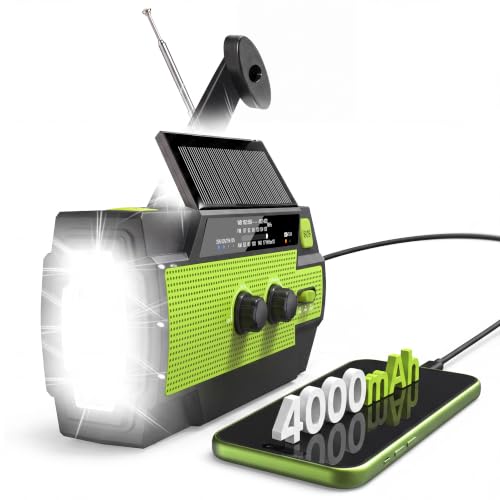
- Emergency radios with hand cranks, solar panels, and NOAA weather bands
- Classic portable AM/FM radios with long battery life and strong reception
Bluetooth is becoming a common add-on, but it’s not always guaranteed. Some models go all-in on analog simplicity, while others offer USB charging ports, power banks, or even flashlights. It all comes down to how you’ll use it.
So, What Should You Buy?
Here are our favorite outdoor radios right now, grouped by category so you can find the one that fits your purpose.
Best Overall Outdoor Radio
Our Top Pick

Best Worksite Radio

Best for Emergency Preparedness

Best Compact Outdoor Radio

Most Versatile Survival Radio

Best Premium Outdoor Radio

Best Budget Emergency Radio
Best For Analog Simplicity


Buyer’s Guide: What to Look For in an Outdoor Radio
Buying an outdoor radio isn’t like buying a speaker or home stereo. It’s about utility, reliability, and context. Who’s using it, where, and in what conditions? This guide unpacks what really matters.
Emergency vs. Everyday Use
First, be honest: Are you buying this for emergencies, or are you someone who just enjoys tuning in while working outside? If you’re prepping for natural disasters, power outages, or long hikes, you need a NOAA-capable radio with backup power options. If you’re just looking for garden tunes, you can prioritize sound and battery life.
Power Sources Matter More Than You Think
Outdoors means away from outlets. The best outdoor radios offer at least two (preferably three) power options:
- Hand Crank: Reliable and infinite—but requires effort.
- Solar Panel: Great when the sun’s out, but slow.
- Rechargeable Battery: Convenient, but check real-life performance.
- Replaceable Batteries: Good for extended off-grid use if you carry extras.
- AC Power: Useful at home or in campgrounds with hookups.
The sweet spot is a combination: crank + solar + battery.
NOAA Weather Alerts: Non-Negotiable for Emergencies
If your radio is part of a survival kit, make sure it supports NOAA channels and ideally has automatic weather alert scanning. Some even include sirens or SOS strobes to get your attention.
Not all radios with FM/AM also receive NOAA. Double-check the spec sheet.
Reception Range and Antennas
A pretty case won’t matter if the signal sucks. Look for telescopic or adjustable antennas, especially if you’re going to be in rural or mountainous areas. Some high-end radios offer SSB or shortwave reception for international access.
For general use, digital tuning is more accurate than analog—but analog dials tend to be more robust in extreme conditions.
Build Quality: Toughness Counts
Outdoor radios should be able to take a few knocks. Look for:
- Water resistance (IPX4 or better)
- Rubberized corners or bumpers
- Sealed ports and battery compartments
- Dustproof or shock-resistant builds
A radio that breaks on the first drop isn’t outdoor gear—it’s shelf decor.
Speaker Quality vs. Practical Loudness
Most outdoor radios won’t wow audiophiles—but they should still be loud enough to hear clearly at a distance or in windy conditions. You want a crisp, mid-focused sound that prioritizes voice clarity over booming bass.
If you care about music quality more than function, look toward models like the Eton Elite Executive.
Portability: Handle, Strap, or Pack
Consider how you’ll carry it. Some radios are genuinely handheld. Others are brick-sized survival units better suited for packs or car trunks.
Look for:
- Built-in handles or straps
- Weight under 2 lbs for extended carrying
- Rugged form factors that don’t snag in a bag
Bonus Features Worth Having
Don’t get distracted by gimmicks—but a few bonus features can genuinely add value:
- Built-in flashlight or reading lamp
- USB charging for phones
- SOS beacon or siren
- Digital clocks or alarm functions
- External antenna jack
These won’t be dealbreakers, but they’re nice to have—especially if you’re in an emergency or low-light situation.
Deep Dive: Why Outdoor Radios Still Matter
In a world of smartphones, satellite messengers, and GPS trackers, it’s fair to ask—why still buy a radio?
Because when infrastructure fails, radios often keep working.
NOAA broadcasts are resilient. FM/AM towers cover wide areas. And shortwave can reach across continents. During hurricanes, wildfires, or power outages, radios remain a vital lifeline. Plus, they don’t need cell service, logins, or apps. Just a signal and power.
For many outdoors lovers, they’re also about simplicity and rhythm. Turning the dial, picking up voices from miles away, getting local weather before a storm hits—it’s grounding. Analog in a digital world.
Some even use them for passive communication: ham operators, preppers, and backwoods campers still tune in and broadcast on open airwaves.
So yes, they still matter. And in the right conditions, they’re not just useful—they’re irreplaceable.

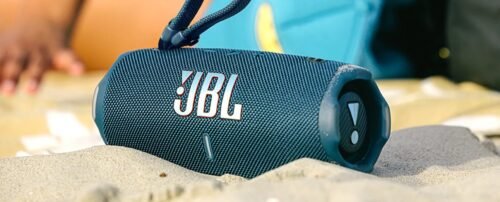





I am searching for the portable radio. Since we are looking for a beach radio, it should be effortless to carry, comes in a handy size, and doesn’t take up much space. Bulky units are not ideal for the beach.